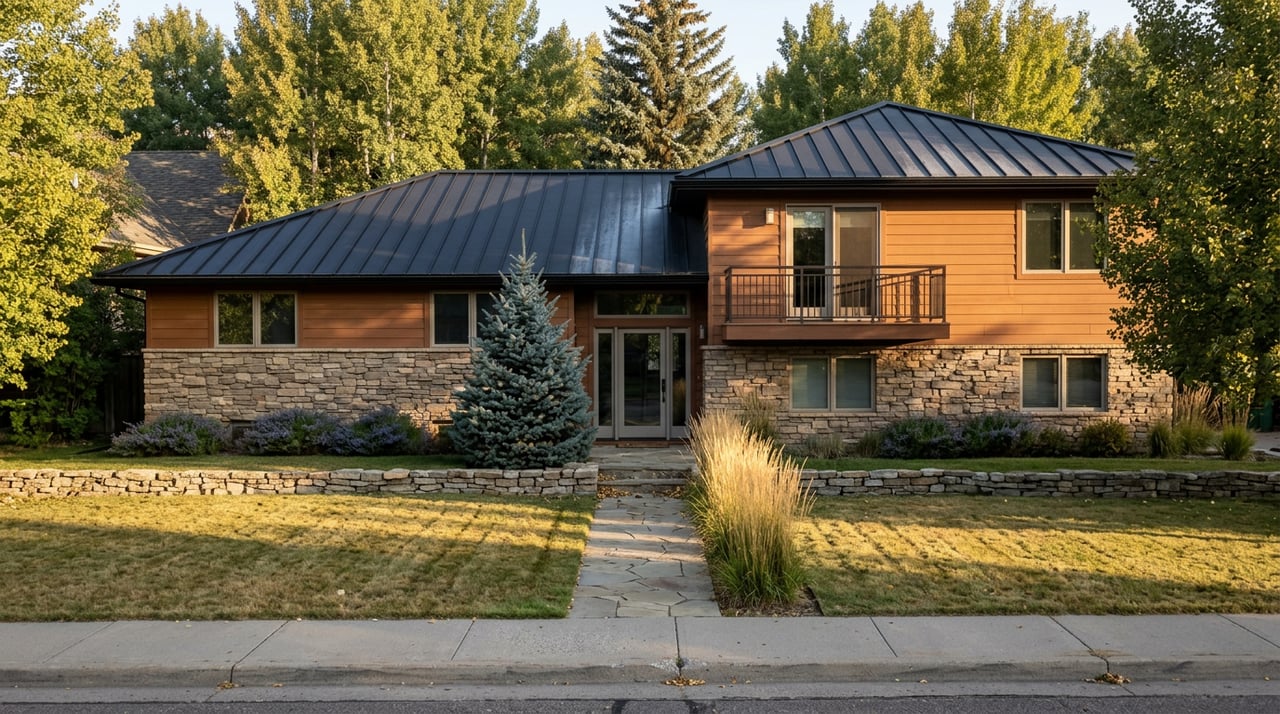
Two homes in Highlands Ranch list at the same price. Same square footage, same school boundary, same finish level. A buyer comparing them on paper sees identical numbers. What that buyer won't see until much later in the process is that one of those homes carries a second, private due that the other doesn't, and neither due is the one most people assume they're paying.
That's the piece missing from most Highlands Ranch buying guides. They'll tell you the HRCA fee exists. Fewer explain that HRCA and the Highlands Ranch Metro District are two different organizations with two different funding models, and fewer still mention that a third, neighborhood-specific layer sits on top of both for some addresses and not others. If you're comparing Highlands Ranch against Parker, Castle Rock, or Lone Tree on total cost of ownership, this is the part of the math that doesn't show up in a median price.
Two Governments, One Address
Highlands Ranch is unincorporated Douglas County, which means it has no city hall of its own. Instead, two separate entities split the work most towns would hand to one government.
The Highlands Ranch Community Association, HRCA, is a private nonprofit. It was founded in 1981 and now serves tens of thousands of member households. HRCA maintains the four residential recreation centers, Northridge, Eastridge, Southridge, and Westridge, operates the 8,200-acre Backcountry Wilderness Area, enforces architectural covenants, and runs the community's event calendar.
The Highlands Ranch Metro District, HRMD, is a public special district and functions as the community's actual local government, with an elected board. It handles roads, streetlights, public parks and trails, storm drainage, snow removal on public streets, the senior center, and the Highlands Ranch Mansion. Water and wastewater service runs through a separate contract with Highlands Ranch Water.
One is a private association you pay dues to. The other is a public body funded through your property tax bill. They share a name, share a service area, and get confused constantly, including by lenders and buyers relocating from cities where a single HOA handles everything.
HRCA maintains the clubhouse. The Metro District maintains the road that gets you there. Neither one covers what the other one covers.
What the 2026 Numbers Actually Say
Most guides quote a vague monthly range for HRCA dues, somewhere between $50 and $160. That range isn't wrong, but it's also not useful, because it blends two separate assessments that HRCA itself keeps distinct in its own budget.
For the 2026 budget year, HRCA's Administrative Function Common Assessment is $16 per quarter, or $64 per year, unchanged from 2025. The Recreation Function Common Assessment is $158 per quarter, or $632 per year, up $12 from the prior year. Add them together and a Highlands Ranch homeowner pays $174 per quarter, or $696 per year, billed quarterly rather than monthly.
That's a fixed, published number for this budget year, not an estimate. It's also the ceiling for what most buyers think of when they hear "the HOA fee." The property tax mill levy that funds the Metro District is a separate line entirely, calculated against assessed value rather than a flat per-household rate, and it shows up on the Douglas County tax bill instead of an HRCA invoice. When you're comparing carrying costs across neighborhoods, conflating the two understates what you're actually paying and makes an apples to apples comparison harder than it needs to be.
The Layer Comparison
Laid out side by side, the three possible layers look like this:
| Layer | Who Runs It | What It Funds | How It's Billed | Who Pays It |
|---|---|---|---|---|
| Master association dues | HRCA, private nonprofit | Four rec centers, Backcountry Wilderness Area, covenant enforcement, community events | Quarterly invoice, $174/quarter for 2026 | Nearly every privately owned property in Highlands Ranch |
| Public infrastructure funding | Highlands Ranch Metro District, public special district | Roads, streetlights, public parks and trails, storm drainage, senior center, the Mansion | Mill levy on the Douglas County property tax bill | Properties inside the district boundary |
| Neighborhood sub-association dues | Individual sub-association boards | Private landscaping, gated entries, neighborhood pools, snow removal on private streets | Separate invoice, amount set by each sub-association | Only specific neighborhoods |
Two of these three layers touch nearly every Highlands Ranch owner. The third is the one that varies house to house, and it's the one buyers most often miss.
The Third Layer Only Some Buyers Ever See
Some Highlands Ranch neighborhoods layer a sub-association on top of HRCA. The Villages at Highlands Ranch Subassociation, known as VHRS, is a good example with clean public documentation: it was created in November 1995, covers 323 homes, and sits inside both HRCA and the Metro District boundary while running its own board and its own dues.
Other named neighborhoods carry similar structures with their own local flavor. Backcountry and Tresana are known for gated sections and stricter design review timing. Firelight and Palomino Park sit close enough to community parks that their covenants address weekend noise directly. Falcon Hills and The Hearth have their own yard maintenance standards layered on top of HRCA's baseline. Stratton Ridge works from an approved exterior paint palette, and homeowners hoping for something bolder than the standard list should expect pushback from the design review committee. Verona and Lantern Hill cap fence heights, often requiring open-style designs to protect sightlines. Timberline Ridge requires permits from both HRCA and the county before removing trees near open space.
None of this makes these neighborhoods harder to live in. It makes them harder to price correctly from a listing sheet alone, because the sub-association due is a private, board-set number that doesn't appear in HRCA's public budget and doesn't appear on the county tax roll either. It appears in that neighborhood's own governing documents and resale certificate, and nowhere else.
Why This Changes How You Compare Neighborhoods
Here's the part that actually matters for a buyer weighing Highlands Ranch against a suburb like Parker or Castle Rock. A $650,000 home in a Highlands Ranch neighborhood without a sub-association carries the same HRCA due and the same Metro District tax exposure as a $650,000 home two miles away that does have one. The list price tells you nothing about which one you're looking at. Only the sub-association's current budget and resale certificate will.
This is also where the timing friction shows up for anyone planning renovations after closing. Design review committees in sub-associations meet on their own schedules, not on the buyer's. A submission that lands right before a holiday can sit for an extra week or two before anyone reviews it, and skipping that step entirely risks having to undo the work later. If a move-up buyer is counting on finishing a fence or a patio before winter, that timeline needs to get checked against the specific sub-association's meeting calendar, not assumed from general HRCA guidance.
Before writing an offer on a Highlands Ranch home, it's worth confirming three things directly rather than assuming they're the same as the last property you looked at:
- Whether the address sits inside a sub-association, and if so, what that association's current dues and reserve position look like
- Which line on the county tax bill reflects the Metro District mill levy, separate from any HRCA quarterly invoice
- When that sub-association's design review committee meets, if any exterior changes are part of the plan after closing
Quick Answers
Does every home in Highlands Ranch pay HRCA dues? Nearly all privately owned residential and commercial properties annexed into HRCA do, through the Administrative and Recreation assessments described above. A small number of properties have different access arrangements, so the specific supplemental declaration for an address is the document that settles it, not a general assumption.
Is the Metro District charge the same thing as an HOA fee? No. HRCA is a private association collecting dues for private amenities and covenant enforcement. The Metro District is a public local government collecting property tax through a mill levy to fund public infrastructure. They fund different things, bill differently, and are legally distinct entities even though both use "Highlands Ranch" in their name.
Will a sub-association's dues show up before closing? They should appear in the resale certificate and governing documents provided during a sale, since Colorado's Common Interest Ownership Act sets disclosure requirements for community associations. Asking for that certificate early, rather than waiting until late in the transaction, gives more time to budget accurately.
Highlands Ranch rewards buyers who ask precise questions early, and the fee structure is exactly the kind of detail that's easy to research correctly once you know which document to request. If you're comparing Highlands Ranch against other South Denver suburbs and want the real cost of a specific address before you write an offer, Nate Forse can walk through the HRCA, Metro District, and sub-association layers for that particular home so the numbers you're comparing are the numbers you'll actually pay.